A letter from Tonic.ai's founders on the Spirit Airlines data sale to Google

The U.S. Bankruptcy Court has approved Tonic.ai as the provider that will de-identify Spirit Airlines’ corporate data before it is sold and transferred to Google. The Sale Agreement requires personal information to be de-identified, and other companies' confidential information to be excluded, before any of the data reaches the buyer. That work is ours.
Spirit and its counsel direct our work. Because this is a court-supervised matter, this letter is limited to our role: what we were engaged to do, why we took on the work, and the standard we hold that work to.
Where our role begins and ends
Whether this data should be sold is a decision for the parties and the Court, and we understand why people hold strong views about it. What we were engaged to do is narrower: making sure that as this data moves, personal information about identifiable people does not move with it.
That work matters to everyone the transaction touches. Anyone whose information is in a dataset like this one will reasonably want to know how it is handled and who will see it. The seller needs a transfer that holds up under scrutiny, and the buyer needs to know what it is receiving. The rest of this letter sets out how that work is done.
What eight years of this work has taught us
We started Tonic.ai in 2018 to solve a problem software teams run into every day. The data they need to build and test against is full of information about real people, and it cannot safely leave their production environments for use in testing. As companies began building with AI, the same problem appeared in documents, email, and chat, where personal information is harder to find and easier to miss. We expanded our solutions to meet that challenge. Today we work with hundreds of enterprise teams in regulated industries, and our team brings decades of combined experience in data and privacy to that work.
The question underneath all of it has stayed the same: how to make data useful without exposing the people in it.
Doing that work taught us a few things we now hold as principles. Removing the obvious names is not the same as protecting the people, because someone can be singled out by details that are not their name. A single missed mention can expose a person who appears throughout a dataset. The people in a company's records are a finite group, and they can be looked up. And a claim that data has been cleaned is merely an assertion until someone measures it.
That last lesson is why we publish our detection results where anyone can check them. PrivacyBench, our benchmark for de-identifying workplace email and chat, is open, with its datasets and scoring public. We would rather be checked than taken at our word.
Why company data is changing hands
The first large AI models were trained largely on the public internet, and there is only so much of it. Now AI labs are turning to internal operating data to learn how work actually gets done inside companies: email, chat, code, and the operating records of the business. The use and sale of this kind of data has accelerated quickly in 2026 as frontier AI labs and enterprises train models on this corpus of previously unavailable data.
What makes this data valuable is also what makes it sensitive. It is a record of real people doing their jobs, and the rules for protecting them when that record is sold or licensed have not been written yet.
Regulation will catch up to this market, and we hope it does. In the meantime, anyone doing this work should set a standard for itself, publish it, and be held to it. That includes us.
Protecting the people in the data while keeping it useful
Our engagement has two parts. We de-identify personal information before the data is transferred, and we exclude other companies' confidential information that Spirit and its counsel designate.
The work begins with finding personal information wherever it appears. Our detection models look for names and other personal information across databases, email, documents, chat, and the other sources included in the sale. Finding it reliably at corporate scale is the challenge, and it is a problem we have worked on for years.
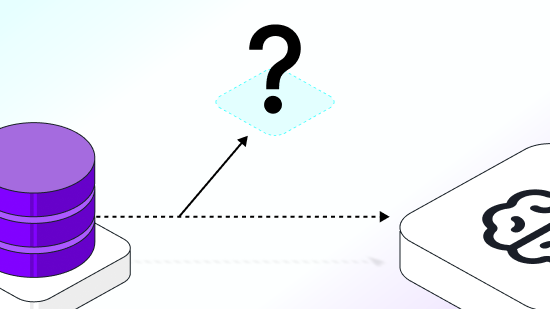
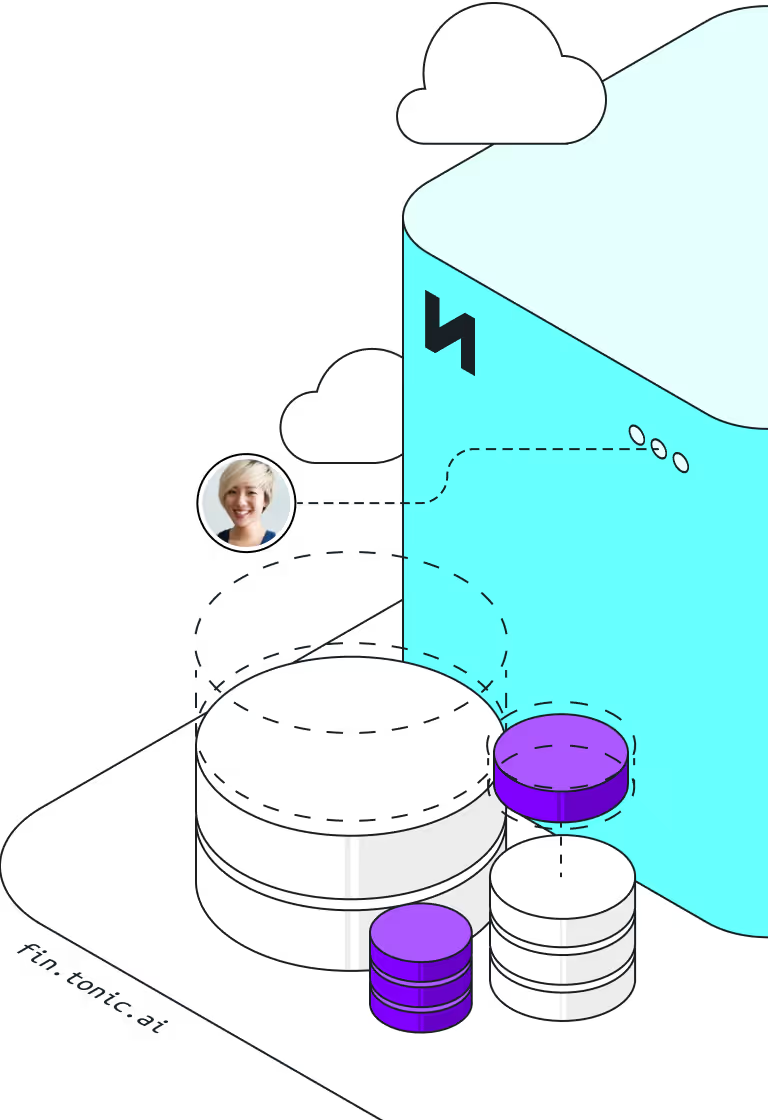
Once personal information is found, every reference to the same person is replaced consistently, so the dataset still reads coherently. The buyer receives only this processed output: never the source data, and never the record that connects real values to their replacements. Without that record, the buyer has no way to turn a replacement name back into a real one.
A company's records also hold material that belongs to its suppliers and partners. Swapping out names does nothing to protect a document like a supplier's pricing schedule, so that material is removed from the dataset entirely, as Spirit and its counsel designate. Anything that cannot be made safe is left out, rather than delivered in the hope that it is safe enough.
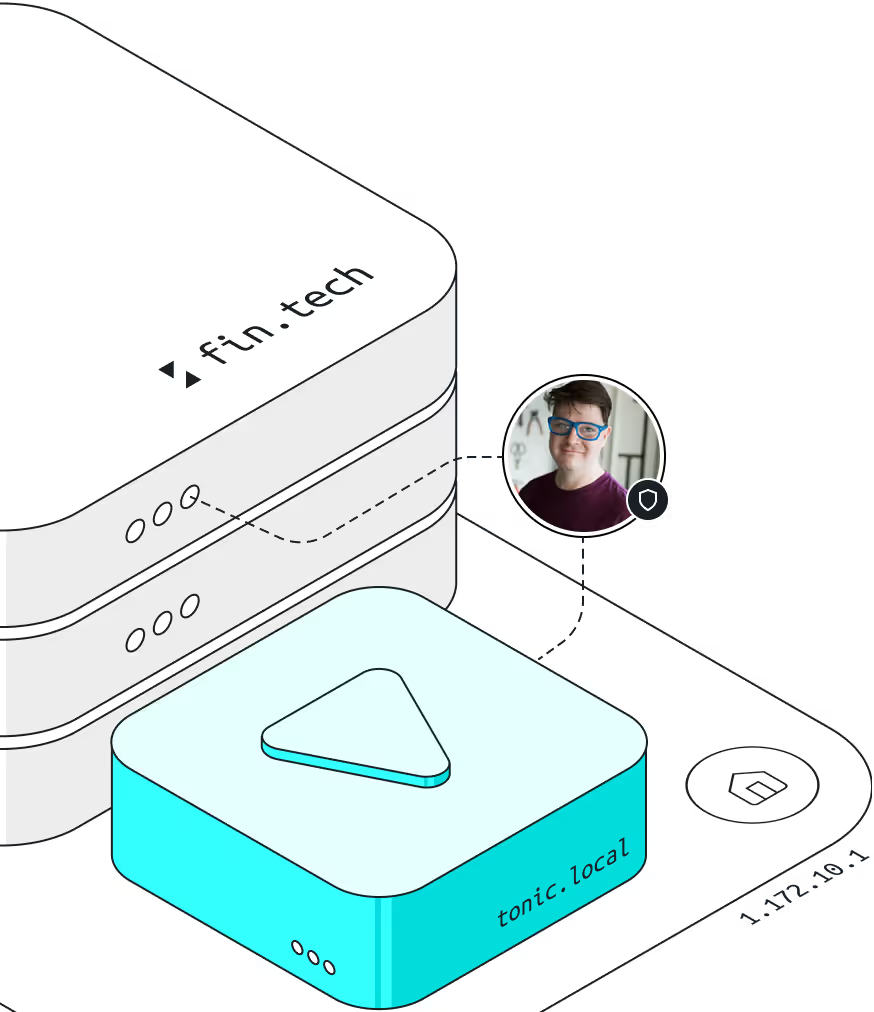
Before anything is delivered, the output is checked. People on the engagement team review statistical samples, measured against standards for privacy and accuracy set before the work began. That review takes place in an access-controlled environment, limited to the engagement team, where every access is logged. The work is also subject to independent verification.
When the work is done, we will state in writing what was done, how it was measured, and what its limits are.
AI training data transfers need an independent privacy layer
A market has formed around company operating data: the companies that hold it, the brokers who package it, and the labs and enterprises that train on it. Every one of them has a financial interest in the data changing hands. The people in the data do not. The chain needs an independent privacy layer: a party that takes personal information out before anything moves, and states in writing what was done and what its limits are. This is the role Tonic was built for.
Tonic doesn't hold the data as an asset, and we work by seven published tenets for de-identifying data that is sold or licensed for AI training, each paired with a way to verify it.
In practice, we receive the data, de-identify it, deliver only the de-identified output under the recipient commitments set out in our engagement, and put our name on the result. That is what we have been retained to do here, and the same rules apply to every data owner, broker, intermediary, or lab we work with.
The question at the center of our work has always been how to make data useful without exposing the people in it. As operating data becomes training data, that question grows more urgent, and so does the need for an independent party between the people in the data and the models that learn from it.
When data changes hands, the work done on it has to hold up in public, in writing, and under examination. That is the standard we hold ourselves to.
We have spent eight years building the privacy layer this data needs.
Sincerely,
Tonic Founders
Ian Coe, CEO Karl Hanson, COO Andrew Colombi, CTO Adam Kamor, Head of Engineering
Ian Coe is the Co-founder and CEO of Tonic.ai. For over a decade, Ian has worked to advance data-driven solutions by removing barriers impeding teams from answering their most important questions. As an early member of the commercial division at Palantir Technologies, he led teams solving data integration chal- lenges in industries ranging from financial services to the media. At Tableau, he continued to focus on analytics, driving the vision around statistics and the calculation language. As a founder of Tonic, Ian is directing his energies toward synthetic data generation to maximize data utility, protect customer privacy, and drive developer efficiency.