You're deep in a build. Editor open, agent running, momentum going. Then you hit the thing you always hit: you need data. Realistic data, more than a handful of rows, with the relationships intact. So you stop, leave the tool you're working in, go generate it somewhere else, and bring it back. Your agent can do almost everything now. Almost.
That last step is newer than it sounds. The way a lot of us work changed fast. More and more development and AI engineering now happens inside one agentic environment — Claude, Cursor, VS Code — where you plan, write, and run without switching tools.
Tonic Fabricate has always made synthetic data easy to generate from a single conversation. But that conversation lived in Fabricate. If your work lived somewhere else, you still had to leave, generate, and come back. The generation was the fast part. The round trip wasn't. So we removed it.
Meet the Fabricate MCP: Synthetic data, inside the tools you already use
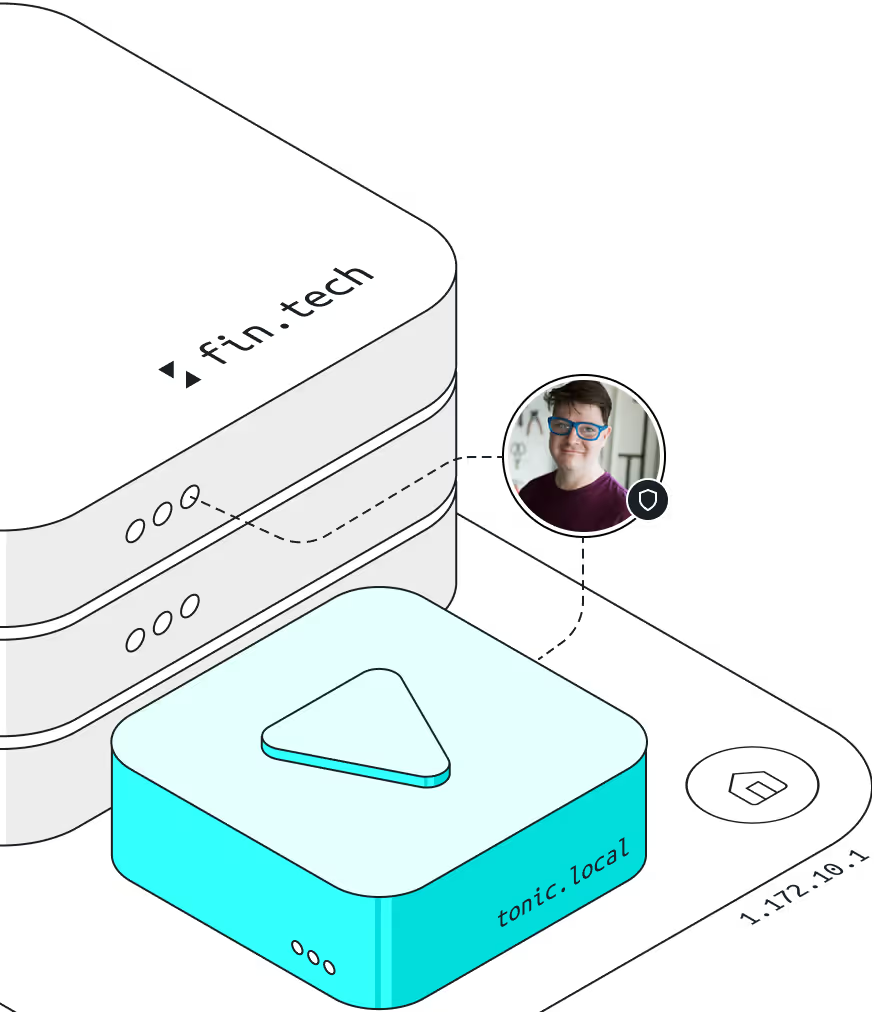
The Fabricate MCP is a server that connects any MCP-compatible client straight to Fabricate. MCP, the Model Context Protocol, is the open standard agents use to talk to outside tools, so this works with clients like Claude, Cursor, and VS Code. Once it's connected, your client sends Fabricate a plain-language request, Fabricate's agents do the work, and your client pulls back the finished artifact.
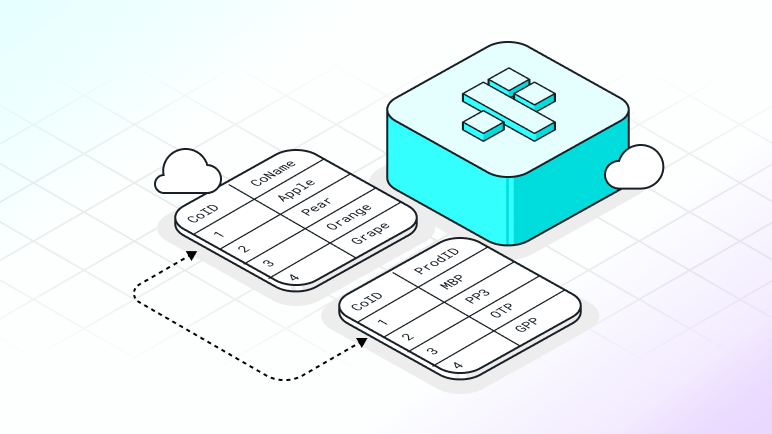
You're not getting a cut-down endpoint, either. You get the full platform: model from live sources, generate from scratch, or combine the two, with referential integrity all the way through.
Connect once, then generate from wherever you work
- Connect your client: Point your MCP-compatible client at the Fabricate MCP server and authorize with OAuth, or use an API key for scripts and CI.
- Ask in plain language: Tell your client what data you need, and it relays the request to Fabricate for you.
- Let Fabricate's agents work: Fabricate models from live sources, generates from scratch, or both, then validates the result for quality and referential integrity.
- Pull back your data: Your client retrieves the finished databases and files, ready to drop into your environment or pipeline.
How a backend engineer seeds a staging environment from Cursor
Say you're a backend engineer building a new feature in Cursor. You need a realistic, multi-table dataset to test against — users, orders, payments, all referentially intact — but production data is off-limits, and hand-writing fixtures would burn your afternoon.
With the Fabricate MCP connected, you stay in Cursor and just describe it: a few hundred users with linked orders and payment records that respect your schema's foreign keys. Cursor relays the request, Fabricate generates and validates the dataset, and hands it back. You drop it into staging and keep going. No context switch, no tab-hopping, no waiting on another team for a data ticket.
What changes when your data lives where you work
Here's the question I'd ask in your shoes: can't my agent just generate the data itself? Sort of. It can produce a few plausible-looking rows. But ask it for thousands of records across linked tables, with foreign keys and business logic intact, and that's not what a general-purpose agent is built to do. It's what Fabricate is built to do.
So think of your client as the orchestrator and Fabricate as the engine. Your agent runs the workflow; Fabricate produces the referentially intact data underneath it. Connected, each does the part it's good at, and the round trip that used to sit between them is gone.
Connect your client and start generating
We built the Fabricate MCP after a number of customers told us the same thing: they work in Claude or Cursor now, and they want Fabricate to come to them. It's live today, interactive or programmatic. Create a free Fabricate account to get started, then check the docs to set up the MCP.

Mark Brocato is a software developer and entrepreneur best known as the founder of Mockaroo, one of the world’s leading synthetic data generators, launched in 2014. The idea for Mockaroo came while Mark was watching QA engineers struggle to test complex life science workflows at a startup called BioFortis, inspiring him to make realistic test data easier for everyone. With over two decades in software development, he’s built tools for developers at Sencha, Layer0, and beyond. In 2024, Mark launched Fabricate, the AI-powered synthetic data platform that was acquired by Tonic.ai in 2025, where Mark continues to lead its development. A Ruby, JavaScript, and Rust developer, he divides his time between Sparta, New Jersey, and Tallinn, Estonia.