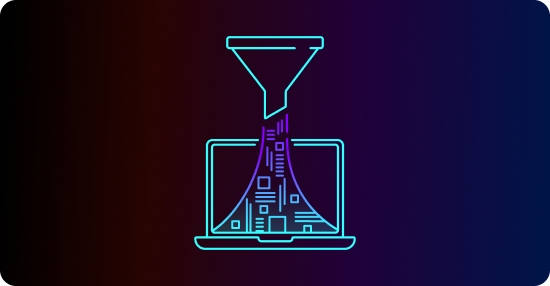
Extracting full production datasets into your development and test environments slows you down, inflates costs, and expands your attack surface. Test data subsetting is the process of pulling a smaller, referentially intact "slice" of production data for QA and development purposes.
When you work with subsets, you can spin up environments faster, focus on specific testing scenarios, and maintain the complexity your application needs—without the overhead of full-scale data. Smaller footprints also reduce the blast radius of a potential leak or breach.
Test data subsetting complements other approaches like synthetic data generation and de-identification. It's ideal when you need realistic records from production—complete with foreign-key relationships and edge-case patterns—but in a manageable volume.
Why test data subsetting is critical for modern QA
Oversized test databases kill agility. When your CI/CD pipelines ingest millions of rows every run, builds take longer, feedback loops stall, and developers wait for data instead of shipping features. Cloud storage bills climb as you spin up dozens of environments with terabytes of unused records.
Beyond cost and performance, a larger dataset is a larger security target. More data means more places where sensitive values might slip through misconfigurations or gaps in your workflows.
Subsetting solves these pain points by giving you exactly the data you need and nothing more. You can target a single customer's history to debug an order flow or sample transactions from a peak period to test load patterns. The resulting dataset remains internally consistent, so foreign-key checks, referential joins, and business-logic validations behave just as they do in production.
With test data subsetting, you accelerate environment spin-up from hours to minutes, cut storage costs by orders of magnitude, and limit exposure of customer data without losing test fidelity.
Core strategies for creating representative subsets
Subsetting a complex database isn't just "pick random rows." You must traverse relationships, maintain referential integrity, and ensure that the subset reflects production's shape. As schemas grow—hundreds of tables linked by foreign keys—manual approaches break down quickly.
Here are four proven strategies for building subsets that remain useful and consistent.
Upstream and downstream traversal
Start from a set of seed records—say, a list of customer IDs—and traverse foreign keys both upstream (parent tables) and downstream (child tables). Upstream traversal walks foreign-key references toward root tables: you include users before their orders. Downstream traversal pulls dependent records: orders before shipments. Combining both directions preserves complete data lineages for the test scenarios you care about.
This approach ensures you include all related orders, payments, support tickets, and audit logs tied to those customers without orphaning critical records or breaking referential chains.
Targeted time-slice subsetting
For time-series data or event logs, carve out a contiguous window like the last 30 days or a high-traffic holiday period. Time-slice subsetting is useful when you need realistic volume and velocity patterns without a full history.
Make sure your slice includes boundary conditions: initial account creations on day one, updates on the final day, and any periodic batch events that span the window. This preserves normal workflows plus archival or cleanup jobs that run monthly or quarterly.
Percentage-based sampling
When you need a random cross-section of production, sample X% of rows from each table. Percentage-based sampling is simple to configure and scales across tables of any size.
To preserve referential integrity, sample in a parent-first order. For instance, sample 10% of users and then include all orders and payments for those users. This approach balances simplicity with consistency.
Condition-based subsetting
Filter records by business logic: customers in a specific region, transactions above a certain amount, or products in a category you're actively developing. Condition-based subsetting tailors your dataset to the scenarios you care about most.
Combine conditions with traversal: for example, subset all fraud-flagged transactions over $10,000, then include the associated customer profiles and device logs. The result is a compact dataset focused on a high-risk use case.
Get the test data management platform built for today's developers.
Accelerate your release cycles and eliminate bugs in production with safe, high-fidelity data generation.
Overcoming common subsetting challenges
Subsetting one table is straightforward; recreating a production-like graph of hundreds of tables is not. Here are three hurdles you'll face when scaling data subsetting across your entire database.
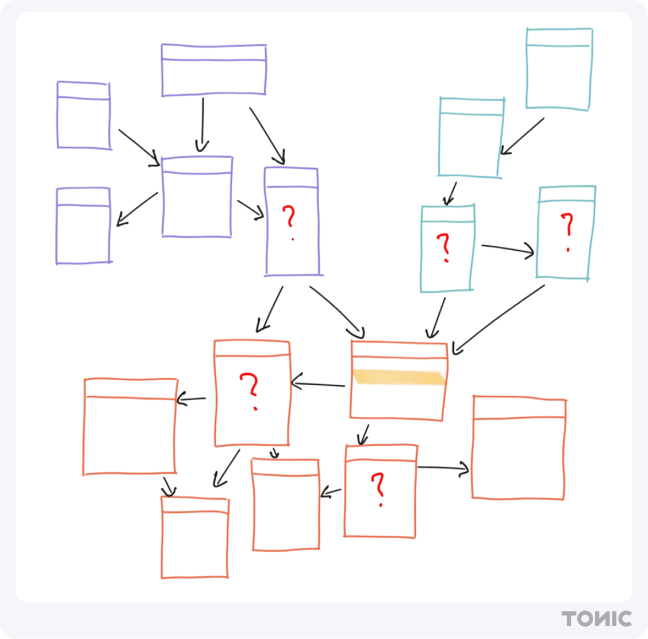
Circular dependencies
Recursive foreign keys—like self-referencing parent-child tables—require carefully ordered extraction or temporary key constraints. These patterns appear often in account hierarchies, organizational structures, and event chains.
Without awareness of the dependency loop, a subsetter can extract records out of order or omit required parent rows altogether. That leads to:
- broken joins
- failed inserts
- test data that behaves differently from production
At scale, handling circular references manually is fragile and hard to repeat.
Data consistency across sources
If related data lives in multiple systems (a user directory in LDAP and a transactions database in Postgres, for instance), you need distributed subsetting logic to keep both sides in sync.
Subsetting only one system can introduce subtle mismatches, such as orphaned records or users without corresponding activity. These inconsistencies surface later as test failures that are difficult to trace back to the data itself. Consistent criteria and coordinated extraction are required to maintain realism across environments.
Combining test data subsetting with de-identification
After subsetting, you often need to mask or de-identify sensitive fields. Doing both in separate steps can break referential integrity or duplicate work. Masking identifiers after extraction can invalidate foreign keys or destroy join paths that tests rely on.
Running two independent processes also increases operational overhead and the chance of configuration drift. A unified approach preserves relationships while reducing the number of moving parts your team must manage.
Solving these challenges at scale demands the kind of automation Tonic.ai offers: graph-aware subsetters that understand your relational schema, enforce extraction order, and apply masking rules in-flight.
Implementing a subsetting strategy with Tonic.ai
Tonic.ai provides an end-to-end workflow for schema-aware subsetting plus de-identification. Here's how to get started:
Step 1: Map the relational graph
Tonic.ai introspects your database, identifies primary and foreign key relationships, and builds a dependency graph automatically. You can also add virtual foreign keys for relationships that aren’t already defined in your database.
Step 2: Define your subset target
Choose from percentage-based sampling or condition-based filters. Specify seed records, time slices, or bespoke criteria via a simple UI or configuration file.
Step 3: Execute and mask
Run the subsetter. Tonic.ai extracts data in the correct order to preserve referential integrity, then applies consistent de-identification transformations—masking, tokenization, format-preserving encryption—in a single workflow to deliver a small, secure dataset.
By combining subsetting with Tonic Structural's de-identification capabilities, you reduce manual effort and eliminate the risk of broken relationships or unmasked values. Structural comes with a built-in patented subsetter that works seamlessly with its masking and encryption workflows to create targeted, de-identified datasets that are ideal for local developer environments and targeted debugging.
For more on how Tonic helps teams sanitize production data for use in testing and hydrate development environments with realistic test data, see our guides.
Get started with test data subsetting at speed
Test data subsetting gives you the speed, focus, and security you need for modern QA. By selecting targeted records, preserving referential integrity, and automating extraction plus masking, you cut costs, accelerate development and testing cycles, and shrink your data blast radius.
Ready to streamline your testing workflows? Book a demo to see how Tonic.ai simplifies schema-aware subsetting and de-identification in a single industry-leading platform.