Tonic.ai is a suite of purpose-built, AI-native solutions for synthetic data generation and test data management, while Synthesized.io is a UK-based platform that combines synthesis and masking within a single product aimed primarily at SAP and testing environments. If you're evaluating a Synthesized.io alternative or encountering them for the first time, the comparison comes down to a question that matters more than any feature checklist: how deep does each product’s capabilities actually go?
A platform that promises to handle generation, masking, subsetting, and provisioning in one bundled product sounds efficient on paper. The appeal of a single tool for everything is real: fewer vendor relationships, one UI to learn, one contract to manage. But when you evaluate Synthesized vs Tonic against your actual use cases, schemas, and data complexity, breadth of claims and depth of implementation are two very different things.
Tonic.ai's approach, offering dedicated products with purpose-built AI agents for each domain, delivers the kind of depth, maturity, and operational reliability that a bundled alternative has yet to match. This article breaks down the comparison across the dimensions that matter most: synthetic data generation, test data management, AI capabilities, and enterprise readiness.
Overview of both platforms
Tonic.ai
Tonic.ai's product suite includes three purpose-built solutions, each with its own dedicated AI agent.
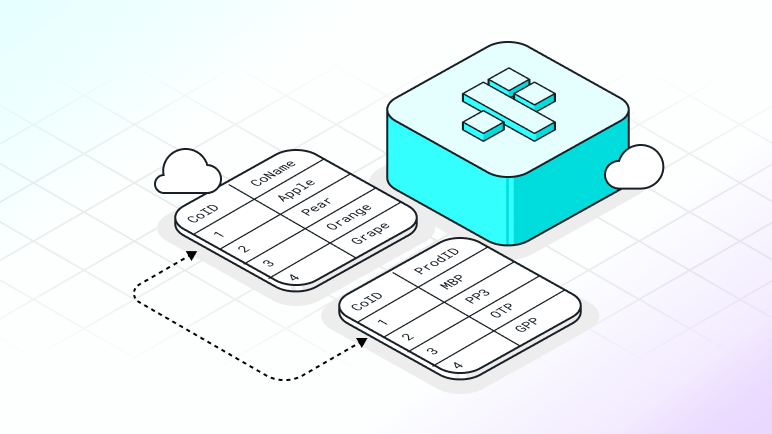
Tonic Fabricate is the synthetic data generation platform. Within a single agent conversation, you can connect to live data sources to model from real-world databases, generate datasets from scratch, or combine both approaches, creating multiple databases and file formats with referential integrity maintained throughout. The Fabricate Agent drafts strategic generation plans for complex schemas, builds mock APIs, and operationalizes results through automated workflows that slot directly into your pipelines.
Tonic Structural is the AI-powered test data management platform. Structural transforms sensitive production data into safe, high-fidelity test data through native database connectors, LLM-enhanced PII/PHI detection, and a patented subsetter that creates targeted, isolated datasets. The Structural Agent turns hours of manual data configuration into minutes through agentic TDM setup and automated generator recommendations.
Tonic Textual handles unstructured data: extracting free-text from wherever it's stored, detecting sensitive information using proprietary NER models, and redacting or synthesizing that information to produce compliant datasets ready for AI development. The Textual Agent lets you explore dataset contents, configure entity handling, and fine-tune synthesis outputs through natural language conversation.
What sets Tonic.ai apart from a bundled competitor isn't just the individual product depth; it's how the products compose. Structural and Fabricate work together: de-identify production data with Structural, then connect Fabricate to that de-identified output to generate additional data modeled after it, scaling up volumes for performance and load testing without reintroducing sensitive information. Textual and Fabricate pair similarly: de-identify unstructured datasets with Textual, then point Fabricate at those datasets to generate new synthetic unstructured data for model training where existing data is scarce.
Purpose-built products that compose into workflows are fundamentally different from capabilities bundled into a single product. Composability gives you depth in each domain and flexibility across domains.
Thousands of developers at companies like eBay, JPMorganChase, Comcast, and Fidelity Investments rely on the Tonic platform in production.
Synthesized.io
Synthesized.io is a London-headquartered platform that positions itself as an end-to-end TDM solution covering sensitive data detection, masking, generation, subsetting, and provisioning. The platform emphasizes SAP testing environments — S/4HANA, SAP HANA, ECC — and CI/CD integration, using a "Data as Code" approach built around YAML-based configurations through their Test Data Kit (TDK). Synthesized has raised $30.5M in funding and references impact cases with Deutsche Bank and the European Commission on its marketing site.
It's worth noting the platform's trajectory. Synthesized originally focused on synthetic data generation for data science and machine learning use cases. In fact, third-party profiles like Tracxn still describe them as a "synthetic data generation platform for machine learning model development." The pivot to enterprise TDM is more recent, and their current marketing emphasizes application-specific testing across SAP, Oracle, Workday, D365, and ServiceNow. That trajectory is relevant context when you're evaluating how mature and battle-tested their TDM implementation is relative to a platform that was purpose-built for it from the ground up.
Synthetic data generation: AI-native agent vs. CLI-first configuration
This is where the contrast between the two platforms is sharpest. If you're evaluating a synthetic data generation platform for software testing, the question isn't just whether a platform generates synthetic data; it's how.
Tonic Fabricate is built around the Fabricate Data Agent. You describe the data you need in natural language. The agent analyzes your schema, connects to live databases to model from existing data, generates from scratch, or combines approaches. For complex schemas, Fabricate drafts a strategic generation plan that gives you control over every step, from table relationships to column-level distributions. The output spans structured data, unstructured data (PDFs, emails, JSON), and mock APIs, all with referential integrity maintained across multiple databases and formats. Automated workflows operationalize the results so generation runs on schedule without manual intervention.
In practice, that means a developer who needs synthetic data for software testing can go from a blank slate to a fully populated, referentially intact multi-database environment within a single agent session, without writing configuration files or scripting generation logic.
Synthesized claims AI-driven generation, but the specifics on what the AI actually does during the generation process are thin in their public documentation and marketing. Their generation approach centers on the TDK, a CLI-first tool that uses YAML configuration files to define masking and generation rules. The "Data as Code" approach has DevOps appeal, and it integrates cleanly into CI/CD pipelines. But it's a meaningfully different experience from conversational AI-driven generation. Writing YAML configs to define data rules is closer to traditional scripting than to describing the data you need and having an agent build a strategic plan specific to your schema.
The gap matters most when you're dealing with complex, multi-table schemas where referential integrity and cross-system consistency are non-negotiable. An agent that understands your schema and plans accordingly handles that complexity natively. A YAML configuration file puts that burden back on your engineers, and the more complex the schema, the higher the cost of that manual configuration.
Test data management: Enterprise-scale masking and subsetting
For AI-powered test data management, the evaluation comes down to implementation depth, and Tonic Structural was purpose-built for this domain.
Structural's LLM-enhanced sensitivity detection catches 50% more sensitive data than rule-based approaches alone, identifying PII and PHI that pattern matching misses. The Structural Agent handles agentic configuration, connecting to databases, recommending generators, and setting up masking policies through conversation rather than manual field-by-field setup. Structural's patented subsetter creates targeted, isolated datasets that preserve referential integrity across the entire database, eliminating collisions in shared testing environments. Native connectors span relational databases, data warehouses, flat files, and NoSQL — your data stays in its native form without entity-modeling detours.
The result is a platform where engineering teams go from production data to safe, high-fidelity test data in minutes rather than days, with the sensitivity detection, masking, and subsetting all handled within a single workflow that maintains data utility throughout.
Synthesized claims end-to-end TDM with masking, subsetting, and provisioning. Their SAP-native capabilities, including pre-built templates for SAP business processes and automatic table relationship mapping, represent a genuine specialization. For teams whose testing needs are narrowly scoped to SAP workflows, that application-level awareness has real value. The platform also supports Oracle, Workday, D365, and ServiceNow as stated environments.
But the broader question is how deep and refined their TDM implementation is across the full range of enterprise data environments. Synthesized pivoted into TDM from a data science origin. Their earlier platform was designed for ML model development, not for enterprise masking and provisioning. Structural has been built for enterprise-scale test data management from the start, refined through years of deployments at organizations like eBay, JPMorganChase, and Patterson Companies, where Structural accelerated test data generation by 75%. When you're evaluating TDM depth, ask for a live demo against your actual schemas. The difference between marketing claims and operational reality tends to surface quickly.
AI capabilities: Demonstrated depth vs. aspirational messaging
Both platforms claim AI is central to what they do. The difference is in what you can verify.
Tonic.ai ships three dedicated AI agents, one per product, each with specific, documented functions. The Fabricate Agent handles conversational data generation, schema analysis, and strategic plan drafting. The Structural Agent manages agentic TDM configuration, LLM-enhanced PII detection, and automated generator recommendations. The Textual Agent provides chat-based dataset exploration and redaction configuration for unstructured data. These are production features, not roadmap items. The documentation for each agent's capabilities is comprehensive and publicly accessible. You can evaluate what the AI does before you ever talk to sales.
Synthesized positions as an "AI-first Test Data Automation" platform on their homepage and uses "AI-driven" language throughout their marketing. Their blog content on AI in TDM articulates a compelling vision for agentic QA workflows. But the public documentation is light on specifics about what the AI currently does during generation, masking, or provisioning — what's automated by the AI versus what requires manual YAML configuration.
When evaluating AI claims from any vendor, the most useful question you can ask is straightforward: "Can you show me the AI in action during a live demo?" Show me the agent analyzing a schema. Show me the LLM detecting sensitive data that rule-based scanning missed. Show me the configuration that the agent recommended. Concrete demonstrations separate shipped capabilities from aspirational positioning.
Enterprise readiness and ecosystem maturity
Tonic.ai was founded in 2018 and is trusted by thousands of developers across financial services, healthcare, and technology organizations, with Blue Shield of California, Commonwealth Bank of Australia, Philips, and Worldpay among them. The platform offers broad connector support across relational databases, data warehouses, flat files, and NoSQL. Documentation is comprehensive and publicly accessible, a meaningful signal for engineering teams who want to evaluate capabilities before committing to a sales conversation. Fabricate offers a free tier, lowering the barrier to hands-on evaluation even further. Product development is active, with regular releases and a public changelog.
Synthesized was also founded in 2018 and has raised $30.5M. They have a strong presence in the SAP ecosystem and the European market, with GSI partnerships including Cognizant and AWS channel relationships. Impact cases reference Deutsche Bank and the European Commission. Their SAP-native focus, covering S/4HANA, SAP HANA, and ECC with pre-built templates and native integrations, gives them a real foothold in SAP-centric evaluations. Cloud marketplace availability on Azure, GCP, and AWS simplifies procurement for teams already operating on those platforms.
The question buyers should weigh is whether the depth of support, documentation, and product velocity behind each claimed capability matches the breadth of the positioning. Synthesized markets coverage across SAP, Oracle, Workday, D365, and ServiceNow, alongside generation, masking, subsetting, and provisioning. That's a broad surface area for any company to cover. Compare the volume and recency of Synthesized's public documentation, customer references, and release history against the same for Tonic.ai, and the difference in engineering investment behind each platform's claims becomes apparent. When a platform's marketing outpaces the evidence available to support it, a hands-on evaluation is the fastest way to see where the gaps are.
Comparison summary: Tonic.ai vs. Synthesized.io
Who should choose which
Choose Synthesized.io if your evaluation is centered on SAP testing environments and you need a platform with application-level awareness of S/4HANA, SAP HANA, and ECC workflows. Synthesized's SAP-native focus, including pre-built templates for SAP business processes and native integrations with SAP toolchains, may be relevant for teams whose testing needs are narrowly scoped to the SAP ecosystem.
Choose Tonic.ai if you need enterprise-grade synthetic data generation, test data management, or both, with proven AI-native capabilities, broad database support, and an established track record across regulated industries. Fabricate gives you agent-driven generation that handles complex, multi-system schemas. Structural gives you battle-tested masking and subsetting refined through hundreds of enterprise deployments. Together, they deliver the depth and composability that a bundled platform hasn't matched.
Bottom line
Synthesized.io occupies a niche in the SAP-centric European market. For narrowly scoped evaluations within that ecosystem, it may appear on your shortlist. But for teams that need proven, AI-native solutions for synthetic data generation, test data management, or both, Tonic.ai delivers purpose-built depth, enterprise-scale maturity, and concrete AI capabilities that a bundled alternative hasn't yet matched. The best way to evaluate the difference is to see it firsthand. Request a live demo from both platforms, run them against your actual schemas, and let the depth of the implementation speak for itself.

A bilingual wordsmith dedicated to the art of engineering with words, Chiara has over a decade of experience supporting corporate communications at multi-national companies. She once translated for the Pope; it has more overlap with translating for developers than you might think.